
Tracing Former Owners of a Steuben County Property
Ownership history starts in the modern deed index. The trail crosses into historical index and record books. Older gaps may call for recorded maps, probate authority, old assessment rolls, County Historian collections, libraries, or archives.
| Source | Years It Covers | Where Held | What It Shows |
|---|---|---|---|
| SearchIQS grantor-grantee and historical indexes | 1986 to the present | SearchIQS and the Steuben County Clerk | Modern index data and available deed images |
| historical County Clerk record books | 1796 to 1986 | County Clerk historical books and counter assistance | Historical index books and selected record-book images |
| SearchIQS Maps and archival map collections | 1796 to 1986 | recorded maps, licensed survey work, and archives | Recorded maps, atlas pages, and deed descriptions |
| Steuben County and municipal assessment rolls | 1796 to 1986 | County Historian, historical society, and local libraries | Dated assessment evidence that can bracket a transfer |
Deeds prove legal ownership. Assessment rolls prove dated administrative ownership, maps fix tract and lot identity, probate supplies fiduciary authority, and archives add names, addresses, and historical context.
Walking the Steuben County Deed Chain Backward
Find the current acquisition deed first. Record its grantor and prior reference, then search that grantor as an earlier grantee, repeating one instrument at a time until the chain reaches a book-only period or a documented gap.
- Find the current acquisition deed with the owner as grantee
- Record the grantor, legal description, and prior-deed reference
- Search the grantor as a grantee in the preceding period
- Cross the online cutoff through historical indexes and book-and-page references
- Grantor / grantee
- Grantor and grantee: the conveying and receiving parties
- Chain of title
- Chain of title: the linked sequence of transfers for the same land
- Legal description
- Legal description: the stable land description when addresses change
How Far Back Steuben County Ownership Records Go
The recorded chain has a real floor. When you reach the oldest accessible books, lean on Clerk assistance, maps, documented patents or grants, probate, the County Historian, libraries, and archival collections. State the endpoint plainly. Never invent an earlier owner.
Lawful use. [1-2 sentences - former-owner research in Steuben County is for house history, title research, and property diligence; using it to track or harass any living person is a crime under New York law.]
Anchor the Steuben County Chain in the Present Deed
The SearchIQS Steuben County access page is the gateway.
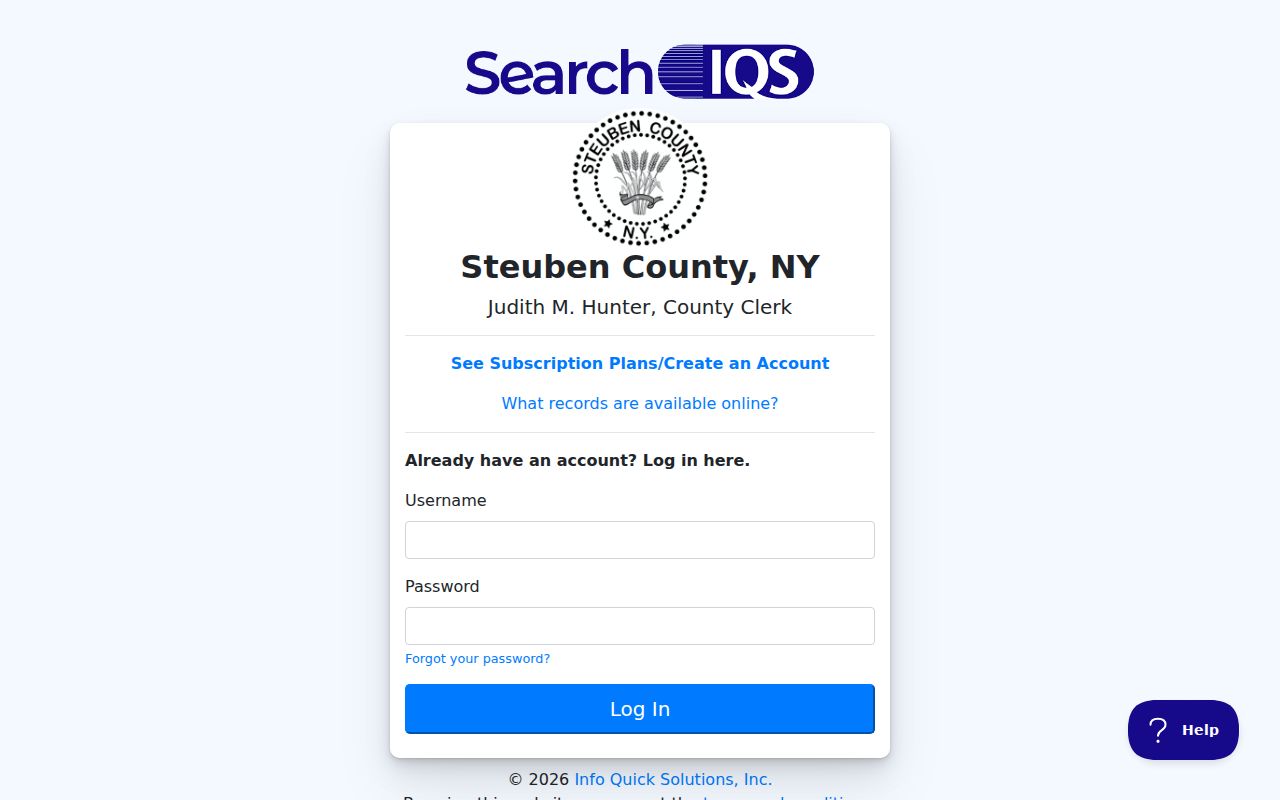
The gateway alone proves nothing. Each party must be matched through the instrument and the legal description before it counts.
Reconstruct former owners from recorded transfers. Start with the latest deed matching the current parcel. Read the current grantee, the grantor who conveyed to that party, the recording date, book and page or instrument number, legal description, municipality, and prior-deed recital. Then search that grantor as a grantee in an earlier period. Repeat one instrument at a time.
A street address is a poor historical key. Numbering, road names, postal cities, and parcel boundaries all change over time. The legal description, subdivision and lot, tract name, acreage, adjoining-owner calls, and prior reference carry the chain across those changes, so keep a separate row for each tax parcel in a multi-parcel property.
Cross the Steuben County Online Cutoff Deliberately
SearchIQS reports deed and mortgage images generally from January 2, 1986 forward. Historical index books cover 1796 through 1986. Selected deed record-book images run from June 1794 through April 1876. Mortgage books have their own selected run through December 1977. Each category demands a different search method. Modern party indexing is not promised on every page.
Browse the older reference directly when the latest deed cites a book and page. If it supplies only a former owner, search name variants in the right index book. Search the right town too. A map citation sends you to the Maps group. A blank modern search, documented with its filters, should be followed by the historical route.
Record Each Previous Steuben Owner as a Transfer
Build a table for the chain. Give every transfer a row with the date, grantor, grantee, deed type, book and page or instrument, municipality, parcel description, and prior reference. This format keeps a directory resident, taxpayer, mortgage borrower, or neighboring owner out of the legal chain. Track name changes, fiduciary roles, and parcel splits separately.
Labels can mislead. A quitclaim, executor deed, trustee deed, referee deed, or tax conveyance may need added context, so read the instrument rather than assuming its effect from its title. Search subsequent corrections and any related court or probate authority. Each link should open and match the same land.
Use Probate to Explain a Break in the Steuben Chain
A deceased owner changes the cast. The parcel may pass to an executor, administrator, trustee, beneficiary, or later purchaser. Search WebSurrogate by the decedent's name and death date. Then narrow by file number. The system offers Name Search, File Search, Old Index Search, Index Book Pages, and Will Search. Images from February 19, 2014 forward may sit online. Earlier files can require a courthouse terminal.
The County Historian advertises indexed abstracts of Steuben Surrogate probate from 1790 through 1900. An abstract supplies the decedent, date, town, heirs, and a file lead, but it is not the full proceeding, so compare the probate authority against the recorded fiduciary deed or court order affecting the parcel.
Historical Steuben Sources Supply Leads, Not Substitute Owners
The County Historian's newspaper microfilm spans 1831 through 1960. It can surface estate notices, sheriff sales, tax sales, fires, construction, business names, roads, and hamlets. Corning history resources list city directories beginning in 1873. Hornell Public Library lists local newspapers from the 1850s through 1907. It also lists yearbooks from 1895 through 2017. The Historical Society and FamilySearch add archival routes.
Directories and newspapers can tie a person to an address and a period. They do not prove title. Label each item as an index, abstract, scan, transcription, or original. Use the name and date to return to the County Clerk chain. Keep historical citations apart from legal-title citations.
Follow Parcel Changes Through Steuben Maps and Rolls
An old tract in Steuben County rarely stays one parcel forever. Owners split land among heirs. They also sell off lots, or assemble several parcels under a single address. Recorded maps let you follow those changes. Search them by subdivision, owner, town, and date. The map index reaches back to 1839. Later images sit online, along with an 1873 atlas record-book run. Match lot numbers and road dedications against the deed descriptions. Those deeds appear in Steuben County property records.
Older assessment rolls tell their own story. They list the owner of record year by year. That can bracket when a transfer happened. The deed is still the instrument that conveys ownership. So treat the roll as supporting evidence. Keep an older roll intact when it explains a later parcel edit. Replacing its owner field with current data destroys the very history you were chasing.
Resolve False Matches in a Steuben Owner Chain
Same surname, same town is the classic trap in a Steuben County owner chain. Compare middle initials, spouses or co-grantees, street addresses, acreage, legal descriptions, and dates. Take all of that into account before trusting a link. The same street can appear in different municipalities. Check the SWIS code, roll, ZIP, fire number, and parcel number instead. Businesses need their own care. Verify the entity name, predecessor names, the grantor role, and the mailing address.
Changed acreage is a clue, not an error. Look for a split, a merge, or a road taking. You should also look for a new geometry version in the parcel data. Write down uncertainty rather than forcing a match. A solid historical chain separates links confirmed by instrument image from those resting on an index. It also flags what remains unresolved. Leave legal conclusions to a title professional. That advice matters most with estates, court transfers, and complex deed records.