
What Steuben County Property Tax Records Show
A Steuben County tax record identifies the parcel, its municipality, the roll year, and the owner of record. It also lists the assessed value and any exemptions, along with district context. The tax bill then applies levies for the cycle and shows collection information for that same period.
| Field | What It Shows | Where |
|---|---|---|
| Assessed value | Assessed value tied to the local roll year | local assessing unit |
| Market / appraised value | Full-value estimate based on the applicable assessment level | local assessing unit |
| Exemptions | Exemptions shown for that parcel and year | local assessing unit |
| Tax bill & status | Collection status that must be confirmed with the collector | local collector and Steuben County Finance |
| Taxing districts | Separate county, municipal, school, village, and district levies | local collector and Steuben County Finance |
Assessed value exists for one job: taxation at the local assessment level. It can diverge from full value and from a deed sale price. None of those three figures, standing alone, is a current appraisal of the property.
Looking Up a Steuben County Tax Bill
Start with the county tax and collector pages. Have the exact parcel number and municipality ready. Confirm the current bill or delinquency stage there yourself, since posted lists and auction notices shift with correction, redemption, withdrawal, or sale.
- Search the Steuben tax and collector sources with the exact parcel and municipality by address or parcel]
- Separate the current bill, prior years, and confirmed payment status
- Compare exemptions with the roll year and assessing unit
- Trace delinquency, notice, court, redemption, auction, and deed stages separately
- Assessed value
- Taxable value: the assessment remaining after applicable exemptions
- Mill rate / levy
- Tax rate: a levy applied under the rules for the taxing jurisdiction
- Homestead exemption
- Exemption: a statutory reduction administered by the assessor
- Tax lien
- Tax lien or delinquency: a collection status requiring current verification
Appealing a Steuben County Assessment
Before any appeal, know what the paperwork actually says. A Steuben County tax record identifies the parcel, municipality, roll year, owner of record, assessed value, exemptions, and district context. The tax bill then applies levies and shows collection information for its own cycle.
Appeal window. [1-2 sentences - Steuben County assessment appeals must be filed by the current local grievance calendar with the local Board of Assessment Review; missing the window means waiting for the next cycle.]
Separate the Steuben County Roll from the Tax Bill
The county's official Assessment Rolls page is where the tentative and final rolls for Steuben County and its municipalities live.
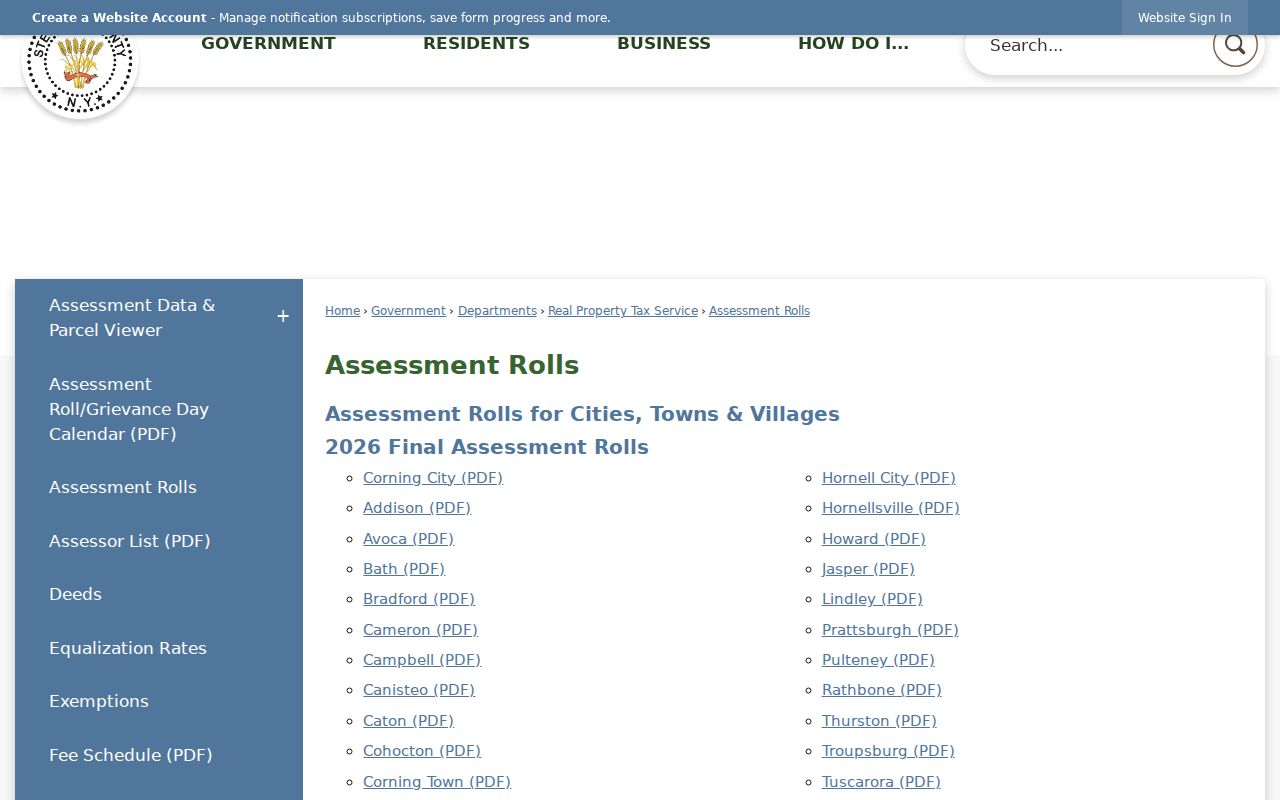
Read the roll links carefully.
Steuben County property tax records start with the local assessment roll. The roll and the bill are two different things. The roll covers one taxing year. On it you will find the assessing unit, the parcel, and the owner of record. It also lists assessed value, exemptions, property class, and district fields. A tax bill, by contrast, is different. It applies county, municipal, school, village, or special-district levies. Those levies run under the cycle in force.
Payment questions, delinquency, foreclosure, and auction status sit elsewhere. The collector and the county Finance process handle them. Keep the parcel, municipality, roll year, and bill year in view whenever you compare numbers.
The county publishes tentative and final roll PDFs. It also posts tax, Finance, collector, installment-contract, and auction pages. So one current answer may span more than one office. Local collectors run the collection stage for their own jurisdiction. County Finance handles delinquent-property-tax matters documented on the county site.
Read New York Assessment Terms Before Comparing Value
Assessed value is simply the value placed on the roll for taxation. New York's level of assessment describes how those assessed values relate to market value. It applies within an assessing unit. At a 100 percent level, assessment should approximate market value. At 50 percent, it is roughly half. The equalization rate compares a municipality's total assessed value with total market value. Its main job is apportioning taxes across municipal and school boundaries. It does not automatically correct any single parcel.
New York sets no statewide reassessment calendar. A year-to-year change in your Steuben County assessment can reflect a revaluation, new construction, an exemption change, or a correction. Market movement can shift it too. A changed assessment level can as well. Compare the municipal profile and the roll year. Never assume assessed value equals a likely sale price.
Steuben County Tax Cycles Depend on Jurisdiction
City, town, village, school, and special-district taxes in Steuben County can each run on separate cycles. Corning's city cycle starts July 1. Hornell's starts May 1. Those dates apply only inside the city limits, so never extend them to a parcel just because its postal address carries the city name. Confirm the SWIS code or the legal municipality through the roll and parcel data first, then follow the county tax-cycle guidance and the correct collector.
A mailing address near Corning could actually sit in Corning town, Erwin, Painted Post, or another nearby jurisdiction. Around Hornell, check Hornellsville and North Hornell too, especially where annexation history matters. The proper assessing unit controls the roll and the grievance route. The collector for that levy controls current payment information.
Trace Delinquency Without Skipping a Steuben County Stage
The official Steuben County Taxes page separates delinquency, notices, collector information, and foreclosure resources.
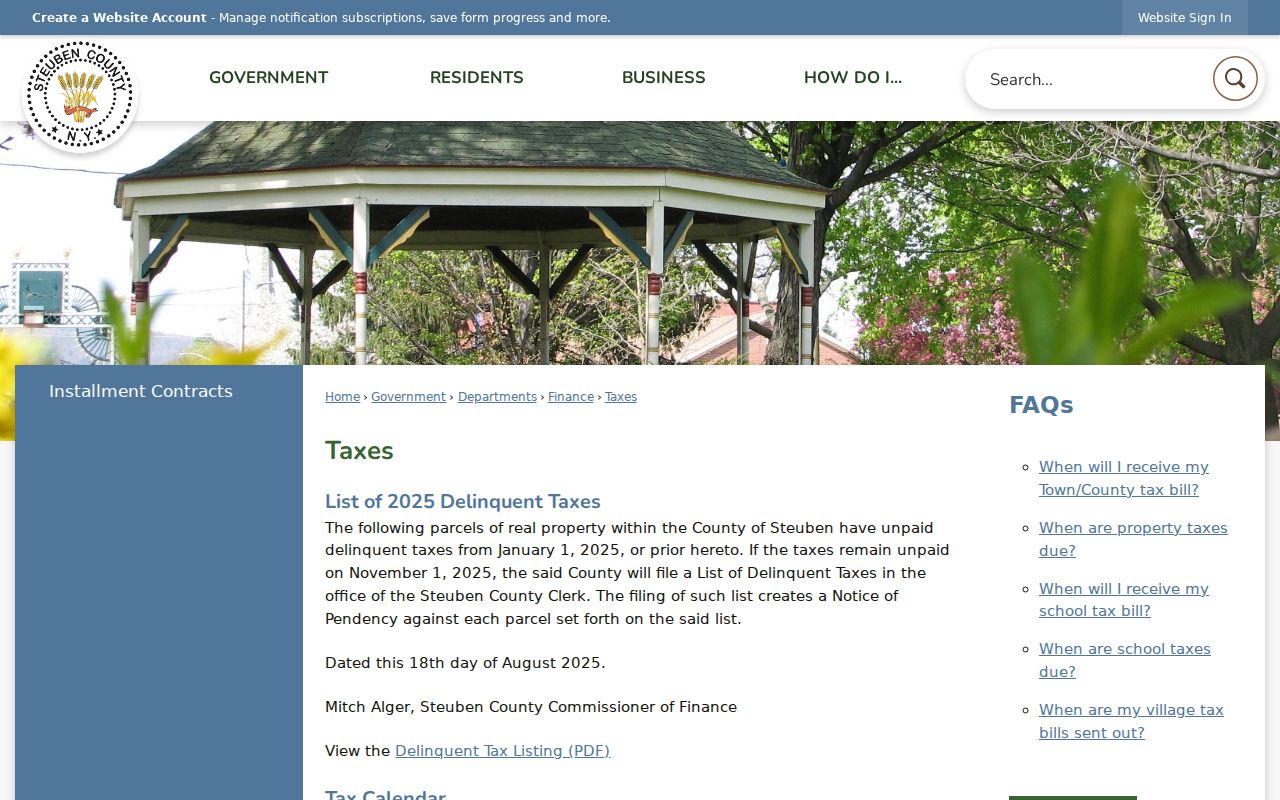
A list tells you where a parcel stood, not where it stands. Confirm any current stage through Finance records. Also check the collector, the court file, and the deed records. Delinquency moves through distinct events. A delinquent listing, notice of pendency, foreclosure petition, judgment, county deed, auction listing, and post-sale quitclaim deed each mean something different in Steuben County. The county's published foreclosure timeline helps you orient. But the parcel's own documents and its Finance status control the answer. Parcels get corrected, redeemed, withdrawn, or stayed after appearing on a list. An auction notice is never a completed transfer.
Track the full picture for any distressed parcel. Record the tax year, municipality, PIN, school district, amount or status field, notice date, case reference, and source date. Then check later county notices, the court file, SearchIQS for a lis pendens or deed, and Finance for current status. If a sale already occurred, read the exact conveyance. Read its exceptions too, before assuming the purchaser received marketable title.
Prepare a Steuben County Assessment Grievance Carefully
New York assessment grievance guidance explains the statewide procedure and required forms.
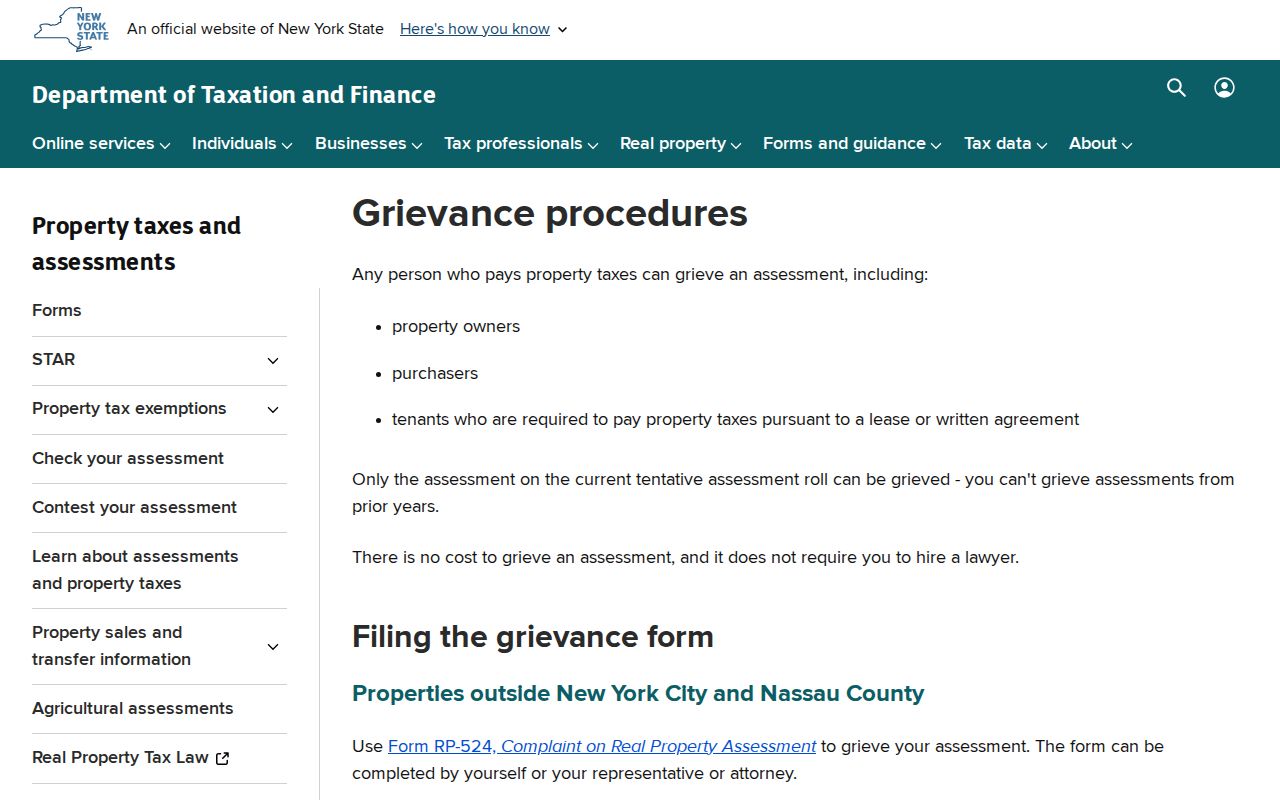
The state process still runs through the Steuben assessing unit current roll and its local grievance calendar. Start there. Read the tentative roll. Confirm the filing calendar before anything else, then speak with the assessor about the parcel, its inventory, property class, and measurements. Recent construction and any exemption matter too. So does the value year. New York publishes the grievance procedure and the RP-524 materials, though the applicable deadline and board schedule must be confirmed for the assessing unit itself. Hornell's assessor information includes appointment-calendar context. Corning keeps its own assessor route.
Evidence earns a reduction. A recent appraisal helps. So do arm's-length sales of comparable property, photographs, repair estimates, an accurate survey, corrected inventory, and records of a recent purchase. Keep assessed value, full-value estimate, taxable value, and sale price clearly separate. The goal is to challenge the assessment on a proper basis, not to subtract a preferred amount from the tax bill.
Exemptions Change Taxable Value, Not the Deed
An exemption can shrink the taxable portion for a qualifying owner or use. It leaves recorded ownership untouched. Read the exemption field and year on the roll. Then consult the assessor and the current New York program rules. Eligibility turns on renewal, income, residency, age, disability, veteran status, agricultural use, or other criteria that vary by program. Those criteria can change. Never infer eligibility from an owner's name. A prior year's roll proves nothing about the current one either.
Ownership changes raise a separate question. When a property changes hands, confirm whether the exemption continues, comes off, or must be newly claimed. The deed records the transfer. The assessor administers exemptions. The collector then applies the resulting taxable base to the bill. Keeping those roles straight prevents an old exemption from being mistaken for a permanent feature of the parcel.
Document the Source Date for Every Steuben Tax Claim
Tax and assessment records in Steuben County change on separate schedules. Save the roll year, bill year, retrieval date, and office name beside every value. Keep the status there too. The newest record is not always the right one. A 2024 roll may preserve a former owner who explains a 2025 deed. A 2026 parcel edit can update the owner of record. It does not touch the older transfer evidence. Match the record to the question.
Auction material is especially time-sensitive. A reader later in the cycle must be able to tell listed from redeemed, withdrawn, sold, or corrected. The reader must also spot a record that was simply viewed at a different point. Recheck the official sources before relying on any current delinquency or auction statement.